Ever walk into a room and feel like something’s just… off? You’ve got beautiful decor, yet the space still feels chaotic. It’s frustrating, right?
The culprit is often a lack of visual balance, a design principle that’s simpler to master than you’d think. We’ve deep-dived into countless home styling projects and seen this issue firsthand. Trust me, we’ve helped many find harmony in their spaces.
By the end of this guide, you’ll know how to use balancing elements decor to transform your room into a calm, cohesive sanctuary. Ready to turn ‘off’ into ‘ahh’? Let’s get started.
The Art of Balance: Home Decor Essentials
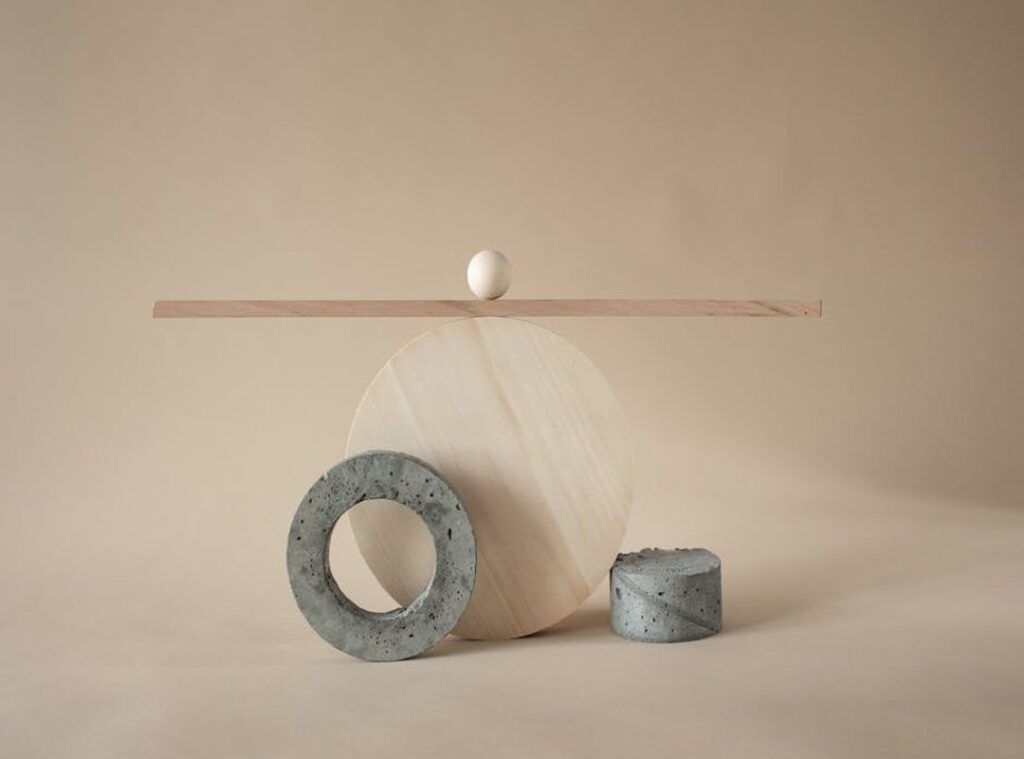
When we talk about balance in decor, it’s not about heft. It’s about visual weight. What grabs our attention?
A dark vase can feel heavier than a light one. Strange, right? It’s all about how our eyes perceive space and color.
Let’s break it down. Symmetrical balance is like a mirror image. Think about two matching lamps on a mantel.
It’s formal and calming, like a classic movie set. Asymmetrical balance, on the other hand, is the seesaw effect. It’s modern, changing, and just more interesting.
Place a big plant on one side of the room and balance it with a few smaller items on the other. It creates a lively, engaging space.
Then there’s radial balance. Picture a ripple in a pond. Everything circles around a central point, like chairs around a dining table.
It’s less common in general decor but perfect for focal points.
Need another trick? When you’re rearranging, remember to maximize natural light design tips. This can boost the overall atmosphere, making your space feel more inviting.
Balancing elements in decor is about playing with these ideas, creating harmony in your home. This balance gives your space a sense of flow and cohesion. Does your room feel right?
That’s the real question.
Playing with Size & Scale: Your First Balancing Tool
Balancing large furniture pieces in a room isn’t about just adding more big items. It’s about creating harmony without clutter. Got a massive, comfy sofa?
Don’t pair it with another hefty piece. Instead, balance its visual weight with a slender floor lamp and an armchair. This saves space but keeps the room from feeling like a furniture showroom.
It’s like a visual conversation happening across your room.
Wall decor can make or break your space. A large piece of art on one wall can be balanced by a gallery wall of smaller frames on the adjacent wall. This trick keeps the room changing and prevents it from feeling lopsided.
Ever heard of the ‘Rule of Threes’? It’s a designer’s secret. Group decorative items in odd numbers (1,) 3, or 5.
Odd numbers are naturally more visually appealing and balanced. Next time you’re arranging decor, remember this. It just works.
Here’s a common mistake: clustering all those tiny, delicate items in one spot and the bulky ones in another. Bad move. You’re not aiming for a flea market vibe.
Spread the visual weight around. Balance is key in any room, and you want the eye to flow from one part of the room to another.
For more on keeping decor balanced and clutter-free, check out this detailed guide. It dives deeper into balancing elements decor and offers practical tips for every space. Don’t just decorate (balance.)
The Secret Weapons: Color and Texture for Harmony
Color isn’t just about picking your favorite shade. It carries significant visual weight. Dark, warm, and saturated colors feel heavy and seem to jump right at you.

On the flip side, light, cool, and muted colors feel light and tend to fade into the background. Picture this: a single, lively yellow throw pillow on one end of a neutral grey sofa can balance a much larger, but still neutral, throw blanket on the other end. It’s about balancing elements decor in a way that feels effortless.
Now, let’s talk texture. It’s often overlooked but holds the power to transform a space. A rough, chunky knit or a heavily-grained wood object commands more visual weight than a smooth, sleek metal or glass object.
Ever walked into a room and felt like something was off? It might just be the lack of texture. If a corner feels empty but doesn’t have space for more furniture, add texture instead.
A large woven basket for blankets or a plush rug can ground the space and add balance.
Pro tip: Mixing textures can create a sense of depth without overcrowding. It’s a bit like adding layers to an outfit (who doesn’t love a good layered look?). And speaking of layers, don’t forget the importance lighting home design.
It’s like the cherry on top that ties everything together. Lights can highlight textures and colors, making them pop even more. So next time you’re redecorating, consider how these elements play off each other.
They might just be the secret weapons you’ve been looking for.
Your Balancing Act: Step-by-Step Styling Scenarios
Creating balance in decor isn’t rocket science. It’s more of an art form. Let’s break it down, scenario by scenario, so you can nail it every time.
Scenario 1: The Bookshelf
Ah, the bookshelf (a) staple in any living room. Start by mixing things up with vertical and horizontal stacks of books. Trust me, it looks effortless and changing. Place a heavy vase on a lower shelf to anchor the space. On a higher shelf, arrange smaller frames to keep things interesting. And please, leave some “breathing room.” Negative space isn’t just for art galleries. Overcrowding your shelf can make it look like a yard sale (and who wants that?).
Scenario 2: The Fireplace Mantel
Fireplace mantels can be tricky, but they don’t have to be. For a symmetrical look, twin candlesticks flanking a central clock always work. It’s classic. Yet, sometimes you want a bit more personality. Enter asymmetrical balance. Try a tall floral arrangement on one side. Offset it with a shorter, wider sculpture and a small stack of books on the other. You get a vibe that’s both relaxed and polished. Now that’s balancing elements decor in action.
Scenario 3: The Coffee Table Vignette
Coffee tables are a playground for creativity. Group your items on a tray. Follow the “tall, medium, short” rule. A tall candle, a medium-sized plant, and a short stack of coasters fit beautifully together. This trio forms a cohesive unit. It’s like a mini art installation, right in your living room. Plus, it’s easy to move when you need to use the table (or when your cat decides to take over).
Ready to revamp your space? Remember, balance isn’t about symmetry. It’s about harmony.
Scenario 4: The Console Table by the Door
The console table is often the first thing you see when you walk in. Let’s make it count. Place a table lamp on one end. Hang a piece of art slightly off-center above it. Add a small bowl for keys at the other end. This setup screams “I’m chic but practical.” It’s functional, welcoming, and sets the tone for the rest of the home.
Let each piece tell its story while the whole picture sings.
Transform Your Space, One Step at a Time
Ever walk into a room and something feels “off”? You know it. Now, you know the solution too.
It’s about balancing elements decor. Not buying new stuff, but using what you have. Focus on size, color, texture.
Simple, right? You don’t need to overhaul your entire home. Start small.
Pick one spot. Maybe a shelf or side table (and) apply what you learned. Try it out.
See the change. You’ll find that achieving harmony is simpler than you thought. Ready to make a difference?
Dive in and transform your space. It’s time. You’ll love the results.
 Trevella Veythanna is the kind of writer who genuinely cannot publish something without checking it twice. Maybe three times. They came to interior styling ideas through years of hands-on work rather than theory, which means the things they writes about — Interior Styling Ideas, Decorad Space Optimization Techniques, Curious Insights, among other areas — are things they has actually tested, questioned, and revised opinions on more than once.
That shows in the work. Trevella's pieces tend to go a level deeper than most. Not in a way that becomes unreadable, but in a way that makes you realize you'd been missing something important. They has a habit of finding the detail that everybody else glosses over and making it the center of the story — which sounds simple, but takes a rare combination of curiosity and patience to pull off consistently. The writing never feels rushed. It feels like someone who sat with the subject long enough to actually understand it.
Outside of specific topics, what Trevella cares about most is whether the reader walks away with something useful. Not impressed. Not entertained. Useful. That's a harder bar to clear than it sounds, and they clears it more often than not — which is why readers tend to remember Trevella's articles long after they've forgotten the headline.
Trevella Veythanna is the kind of writer who genuinely cannot publish something without checking it twice. Maybe three times. They came to interior styling ideas through years of hands-on work rather than theory, which means the things they writes about — Interior Styling Ideas, Decorad Space Optimization Techniques, Curious Insights, among other areas — are things they has actually tested, questioned, and revised opinions on more than once.
That shows in the work. Trevella's pieces tend to go a level deeper than most. Not in a way that becomes unreadable, but in a way that makes you realize you'd been missing something important. They has a habit of finding the detail that everybody else glosses over and making it the center of the story — which sounds simple, but takes a rare combination of curiosity and patience to pull off consistently. The writing never feels rushed. It feels like someone who sat with the subject long enough to actually understand it.
Outside of specific topics, what Trevella cares about most is whether the reader walks away with something useful. Not impressed. Not entertained. Useful. That's a harder bar to clear than it sounds, and they clears it more often than not — which is why readers tend to remember Trevella's articles long after they've forgotten the headline.