We’ve all been there, right? You want a home that screams style but the chaos of design trends stops you cold. It’s not about filling your space with stuff.
It’s about clarity. I’ve spent years helping folks get through this mess, separating the must-haves from the forgettable. The truth? Minimalist interior design doesn’t mean stripping your life down to nothing.
It’s about intention (choosing) pieces that matter.
By the time you’re done here, you’ll have a plan that works. Trust me, there’s a thrill in simplifying your space and making it yours. We’ll cover core principles, share a 3-step method for any room, and dive into easy wins with color and space.
Ready for a home that feels like you? You’re in the right place.
The Foundation: What Simple Interior Design Really Means
Simple interior design isn’t about stripping down to cold, empty spaces. It’s about essentialism. Picking what truly matters.
Let’s get into it.
First, Function First. Everything in your home should serve a purpose. Take a coffee table.
Is it just gathering clutter, or is it smartly storing your books and providing a spot for your coffee? If it’s doing neither, it’s time to rethink its place. Every item should justify its spot in a room.
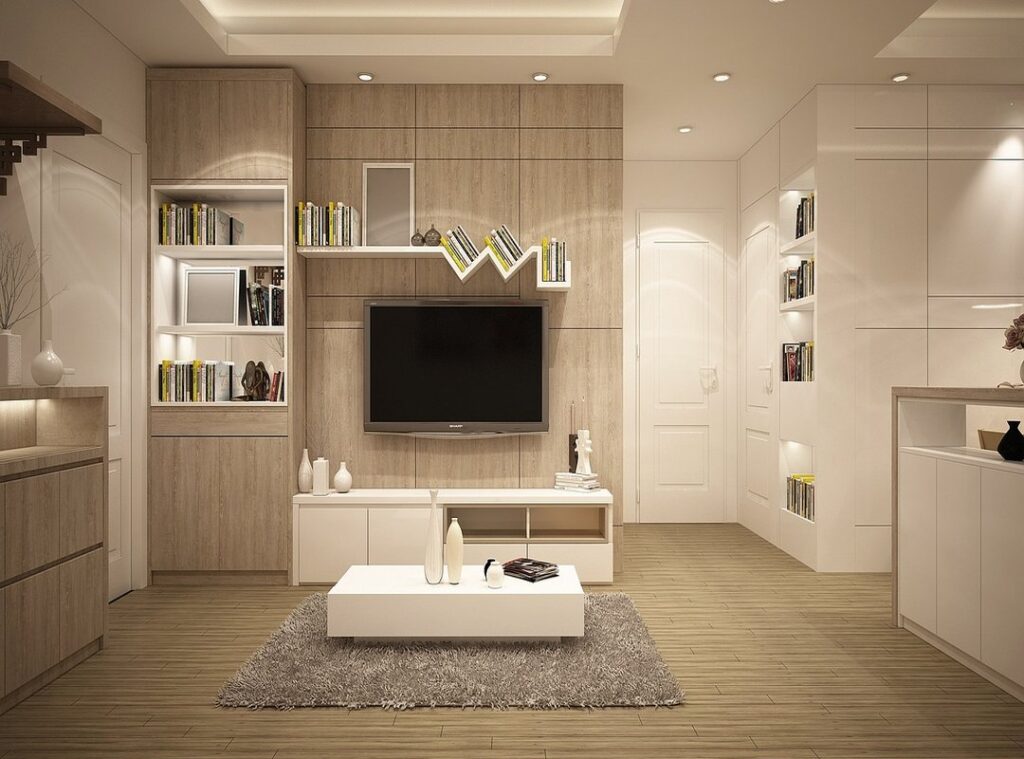
Then there’s Visual Calm. This is about negative space, the unsung hero of design. A cluttered bookshelf can overwhelm you.
But a curated one with space to breathe? That’s peace for your eyes and mind. The room feels bigger, more inviting.
Just imagine walking into a room where every piece fits like a puzzle. That’s what we want, right?
Think of your space as a reflection of you. Sure, minimalist interior design often gets mistaken for sterile, but it should highlight the unique. It’s about picking pieces that mean something.
Finally, we have Personal Connection. Simplicity isn’t about being dull. It’s about fewer, better things that tell your story.
Ever thought about mixing vintage modern perfect blend? That’s a style that screams personality, and you can explore more about it here.
So, it’s not about having less but choosing well. Each item should function, soothe, and connect. Simple, right?
Your Blueprint: A 3-Step Method to Simplify Any Room
Welcome to the most actionable part of this article. If you’re ready to transform your space, you’re in the right place. to this practical method that can revolutionize how you approach minimalist interior design.
Step 2: The ‘Define’ Phase (Anchor and Zone). This is where you start giving your room a purpose. Ask yourself, what’s the main function here? Is it a living room or an office? Identify the ‘anchor’ piece. In a living room, it’s usually the sofa; in a bedroom, it’s the bed. Once that’s set, build ‘zones’ around this anchor. Maybe a reading nook or a conversation area. It’s about creating spaces within spaces. This approach aligns perfectly with the minimalist interior design philosophy, which you can learn more about in this resource.
Step 1: The ‘Edit’ Phase (Declutter with Purpose). We all know the phrase “get rid of stuff,” but how often do we actually do it? Let’s make this more strategic. I suggest categorizing items into four boxes: Keep, Relocate, Donate/Sell, and Unsure. Now, here’s the kicker for the ‘Unsure’ box: if you don’t use it in 30 days, it’s out. No exceptions. This forces you to confront what you really need versus what you think you might need someday (spoiler alert: you probably won’t).
Step 3: The ‘Refine’ Phase (Intentional Decor). Now, let’s add some style back. But there’s a rule here: for every three functional items, add one purely decorative one. It’s about balance, not clutter. Think of a lamp, a side table, or a plant stand as functional. Pair them with a piece of art for that decorative touch. It’s a simple yet effective way to maintain a minimalist vibe without making the room feel sterile.
Does this process sound overwhelming? It shouldn’t. By breaking it down into clear steps, you can tackle any room without feeling like you’re drowning in decisions.
Take it one step at a time. Trust me, the payoff is worth it. You’ll find yourself in a space that’s beautiful but also functional.
And who doesn’t want that?
Effortless Harmony: Simple Color Palettes That Always Work
Choosing colors is a nightmare, isn’t it? You stand there, staring at paint swatches, feeling overwhelmed. But here’s a secret: simplicity rules in color schemes.

A minimalist interior design approach creates calm but also makes spaces feel larger. Start with monochromatic palettes. They’re a no-brainer.
Stick to different shades of a single color (think light grey, charcoal, slate grey). It’s like wearing a perfectly tailored suit. Everything matches, nothing clashes.
Now, if you want a splash of variety without the chaos, go for an analogous palette. Colors next to each other on the color wheel (like blues and greens) play well together. It’s like your favorite playlist where each song flows into the next.
No jarring transitions. Just smooth harmony.
But how do you apply these colors practically? Enter the 60-30-10 rule. It’s foolproof.
Use 60% of a dominant color for your walls. Choose 30% of a secondary color for your furniture. Add 10% as an accent with pillows or art.
Picture this: 60% off-white walls, 30% tan leather furniture, and a pop of 10% forest green. Perfect balance. Trust me, it works.
For those into the industrial chic urban style home decor, these rules apply too. Replace colors accordingly, but the principle remains the same. Keep it simple, stay cohesive.
It’s all about creating spaces that feel both inviting and stylish. After all, who doesn’t want a home that looks like it stepped out of a magazine?
Maximize Your Space: Tricks for Functional Flow
Who said bigger is better? With minimalist interior design, simplicity is key to creating a functional flow. A simple room feels larger.
Ever walked into a cluttered room and felt cramped immediately?
Consider the magic of multi-functional furniture. An ottoman with hidden storage, for example, can be a game-changer. Or how about a console table that doubles as a desk?
These pieces aren’t just space-savers; they’re lifesavers. Nesting coffee tables offer flexibility and style without eating up space.
Now, let’s talk pathways. Keep them clear and at least three feet wide. You might think this sounds trivial, but it dramatically improves a room’s flow.
Trust me, navigating through a maze of furniture isn’t anyone’s idea of fun.
Mirrors and lighting are your secret weapons. A large mirror opposite a window won’t just reflect light, it’ll double it. That natural light can make any room feel open and inviting.
Want to test it out? Place a lamp near that mirror, and watch your room transform.
Remember, minimalism isn’t about sacrifice. It’s about smart choices. So, are you ready to rethink your space?
It’s time to make every inch work for you.
Start Your Stylish Home Journey Now
Transforming your space into a simple, beautiful haven isn’t about cluttering with more stuff. It’s about embracing minimalist interior design. Overwhelmed?
I get it. That’s why a clear system, like the 3-step method, works wonders. Start small.
Edit one corner of your room this week. Ready to dive deeper? Want more ideas?
Visit decoradhouse.com.co for inspiration. Don’t wait. Take control of your home design.
Your stylish, serene space awaits. Go explore.
 Richards Lambusteder has opinions about interior styling ideas. Informed ones, backed by real experience — but opinions nonetheless, and they doesn't try to disguise them as neutral observation. They thinks a lot of what gets written about Interior Styling Ideas, Practical Home Makeover Tips, Decorad Space Optimization Techniques is either too cautious to be useful or too confident to be credible, and they's work tends to sit deliberately in the space between those two failure modes.
Reading Richards's pieces, you get the sense of someone who has thought about this stuff seriously and arrived at actual conclusions — not just collected a range of perspectives and declined to pick one. That can be uncomfortable when they lands on something you disagree with. It's also why the writing is worth engaging with. Richards isn't interested in telling people what they want to hear. They is interested in telling them what they actually thinks, with enough reasoning behind it that you can push back if you want to. That kind of intellectual honesty is rarer than it should be.
What Richards is best at is the moment when a familiar topic reveals something unexpected — when the conventional wisdom turns out to be slightly off, or when a small shift in framing changes everything. They finds those moments consistently, which is why they's work tends to generate real discussion rather than just passive agreement.
Richards Lambusteder has opinions about interior styling ideas. Informed ones, backed by real experience — but opinions nonetheless, and they doesn't try to disguise them as neutral observation. They thinks a lot of what gets written about Interior Styling Ideas, Practical Home Makeover Tips, Decorad Space Optimization Techniques is either too cautious to be useful or too confident to be credible, and they's work tends to sit deliberately in the space between those two failure modes.
Reading Richards's pieces, you get the sense of someone who has thought about this stuff seriously and arrived at actual conclusions — not just collected a range of perspectives and declined to pick one. That can be uncomfortable when they lands on something you disagree with. It's also why the writing is worth engaging with. Richards isn't interested in telling people what they want to hear. They is interested in telling them what they actually thinks, with enough reasoning behind it that you can push back if you want to. That kind of intellectual honesty is rarer than it should be.
What Richards is best at is the moment when a familiar topic reveals something unexpected — when the conventional wisdom turns out to be slightly off, or when a small shift in framing changes everything. They finds those moments consistently, which is why they's work tends to generate real discussion rather than just passive agreement.